
12/17/2025 | LinkedIn
In engineering environments, feedback is a structural element of performance, quality, and innovation. Yet many teams still operate in a low-feedback mode — relying on assumptions, silent corrections, or fixing issues only when they become too big to ignore.
A strong feedback culture does the opposite: it accelerates learning, reduces risk, and keeps teams aligned even in high-pressure delivery cycles.
Here’s how engineering organizations can build it consciously.
1. Make Feedback a System, Not a Personality Feature
High-performing teams don’t depend on “brave individuals� who speak up.
They design processes where feedback is expected, routine, and safe.
Defined expectations: every engineer gives and receives feedback regularly
When feedback is part of the operating model, people stop treating it as confrontation and start seeing it as collaboration.
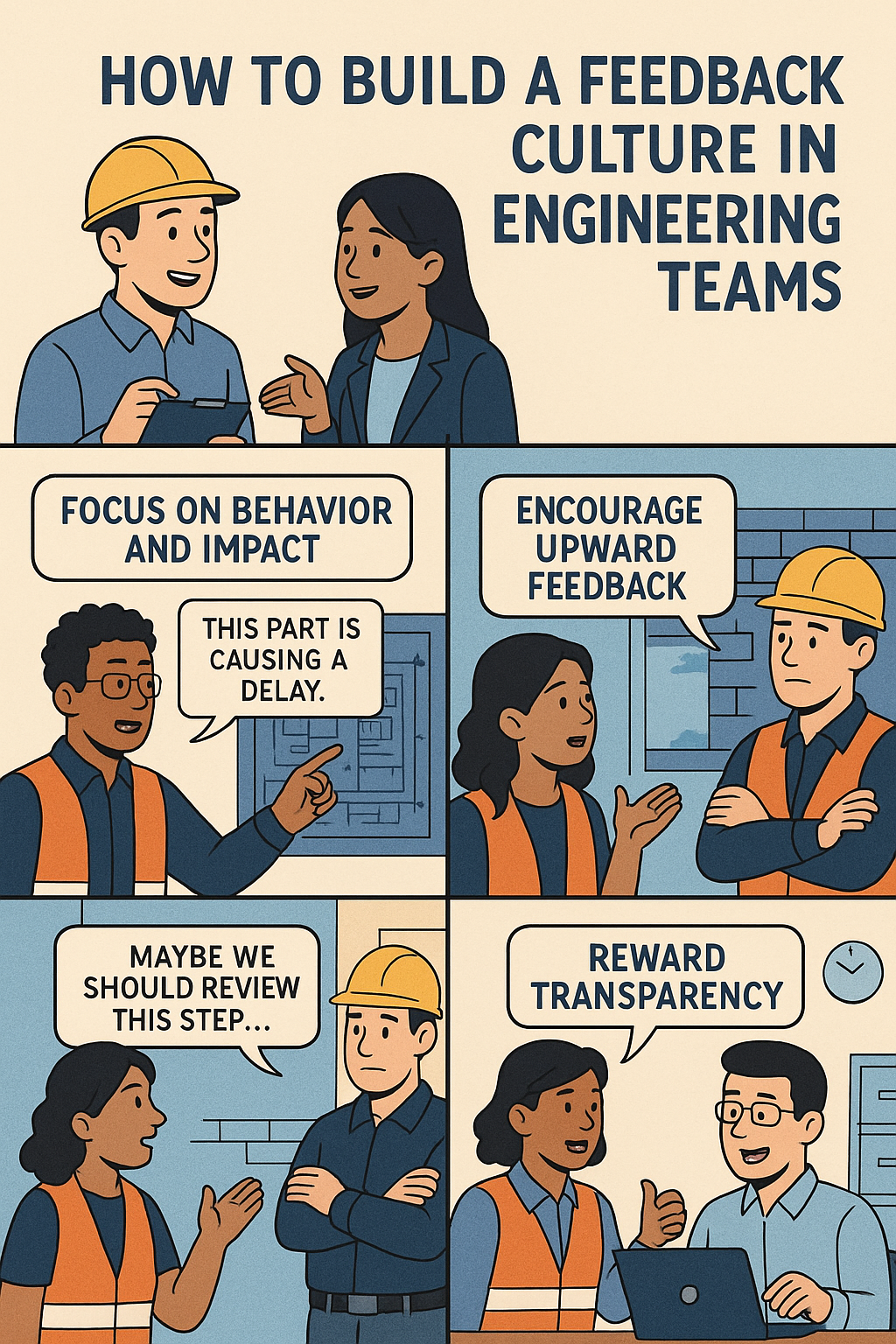
2. Focus on Behavior and Impact, Not on People
The quickest way to destroy trust is to make feedback personal.
Effective engineering feedback follows a simple pattern:
-Observation — what exactly happened
-Impact — why it matters for quality, safety, reliability, risk
-Next step — how to adjust going forward
This keeps discussions technical, constructive, and aligned with engineering outcomes.
3. Encourage Upward and Horizontal Feedback
Most companies say they want openness — but the real test is whether engineers can challenge decisions, escalate risks, or question assumptions without fear.
Teams grow stronger when:
-Senior engineers invite critique of their own designs
-Leads ask, “What am I not seeing?�
-Peer feedback is normalized, not reserved for performance reviews
-Engineering excellence requires friction — the useful kind.
4. Reward Transparency, Not Heroics
When feedback is punished or ignored, people start hiding problems.
When feedback is recognized, people surface issues early — and projects stay under control.
Celebrate:
-Early risk signals
-Transparent communication
-Engineers who improve processes
-Culture is shaped by what leadership rewards.
5. Close the Loop
Feedback without follow-through creates fatigue.
Teams must show that input leads to visible change:
-Updated standards
-Improved testing routines
-Clearer designs
-Faster reviews
-Better tools and documentation
When people see results, they engage even more.
A feedback culture is an engineering capability.
It reduces defects, accelerates delivery, and increases confidence in every decision.
But most importantly, it builds teams that trust each other enough to solve complex problems together.
PF Automation & Digital Solutions. Unbiased Expertise. Industrial Results.
https://www.pf-ads.com/ https://lnkd.in/dEb_Sscu
hashtag#feedbackculture hashtag#engineeringleadership hashtag#continuousimprovement hashtag#industrialprojects hashtag#riskmanagement hashtag#systemsengineering hashtag#PFADS hashtag#automation hashtag#digitalization hashtag#projectdelivery hashtag#engineeringexcellence